Whole-Home Mold Remediation in Reno, NV
The pipe in the upstairs bathroom froze during the January cold snap and split. Nobody was home. By the time a neighbor noticed water under the garage door, it had run through the ceiling, down every wall on the ground floor, and into the crawl space. Or the house was a rental between tenants, the furnace was off to save money, and a roof leak ran all winter. One patch is a repair. This is a project. This site connects you by phone with an independent local provider who does whole-home mold remediation in Reno and across Washoe County.
What the crew does first
A whole-house job is planned room by room before anything is opened. The crew walks the house with a moisture meter and marks every wall, ceiling, cabinet, and floor that reads wet, then maps where the water went. In a two-story Reno tract home that usually means the ceiling and walls under the leak, the bottom two feet of every wall the water reached downstairs, and whatever is under the floor.
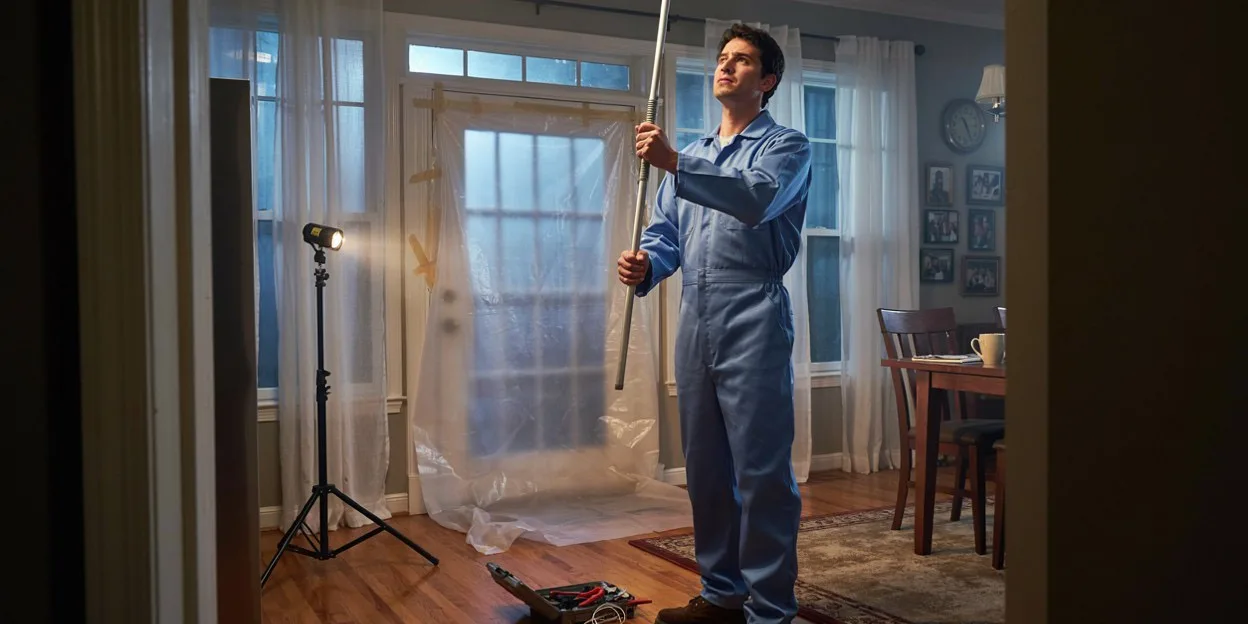
Then they build containment in stages. Rather than one plastic wall at a door, they seal the house in zones, run negative air in the zone being worked, and cover every register so the furnace is not pulling dust through the ductwork. Belongings get sorted into three groups: hard items that can be cleaned, soft items that can be cleaned elsewhere, and porous items that go.
What to do in the next hour
Shut the water off at the main if it is not already. Get heat into the house if it is winter, because a cold wet house does not dry and frozen pipes keep splitting. Open interior doors so air moves, but do not run box fans through the house. They push spores from the wet rooms into the dry ones.
Do not start hauling things to the curb. Photograph every room first, including the contents, because an insurance claim on a whole house depends on that record. If the furnace or ducts got wet, tell the crew, because HVAC mold cleaning gets folded into the plan.
What is usually saved and what is removed
Drywall, baseboard, insulation, carpet and pad, particleboard cabinet bottoms, and laminate flooring come out where they read wet. Wood framing, subfloor, tile, and concrete stay and get cleaned. Kitchen and bath cabinets are the hard call. Solid-wood boxes can often be cleaned and dried. Particleboard boxes that sat in water rarely can.
Once the porous material is out, the crew HEPA vacuums and wipes every surface in the zone, then runs drying equipment until the framing and subfloor read dry. That takes longer in winter than people expect. Fixing the source is part of the job: the split pipe, the roof, the crawl space vent that let the cold in. When the house is dry, mold damage repair puts the walls and floors back.
Washoe County notes: freeze, floods, and empty houses
Whole-house mold in Reno almost always starts with a house nobody was watching. Second homes in Incline Village and Verdi that sat closed through a winter. Rentals between tenants. Houses in escrow. A frozen pipe or a roof leak in an empty house runs for weeks, and mold follows within days once the weather warms.
The other pattern is the river. The Truckee flooded downtown Reno and the Sparks industrial district on New Year's Day 1997, again on New Year's Eve 2005, and again in January 2017. The North Valleys had their own version in 2017, when Swan Lake in Lemmon Valley rose over homes and stayed high for more than a year. Houses that took floodwater and sat while the owner waited on an adjuster grew mold on every floor-level surface.
Nevada does not issue a separate mold license. The contractors doing removal and rebuild work are licensed through the state contractors board. A whole-house job usually needs permits for the rebuild, from the city or from Washoe County for unincorporated addresses. Many policies limit what they pay for mold, and a job this size usually runs past that limit, so talk to your adjuster before the work starts.
Calling about whole-home mold remediation
Have the address, how the water got in, and how long the house sat. Say how many rooms are affected, whether the heat is on, and whether an adjuster has been out. Call (775) 459-9573.