Crawl Space Mold Remediation in Reno, NV
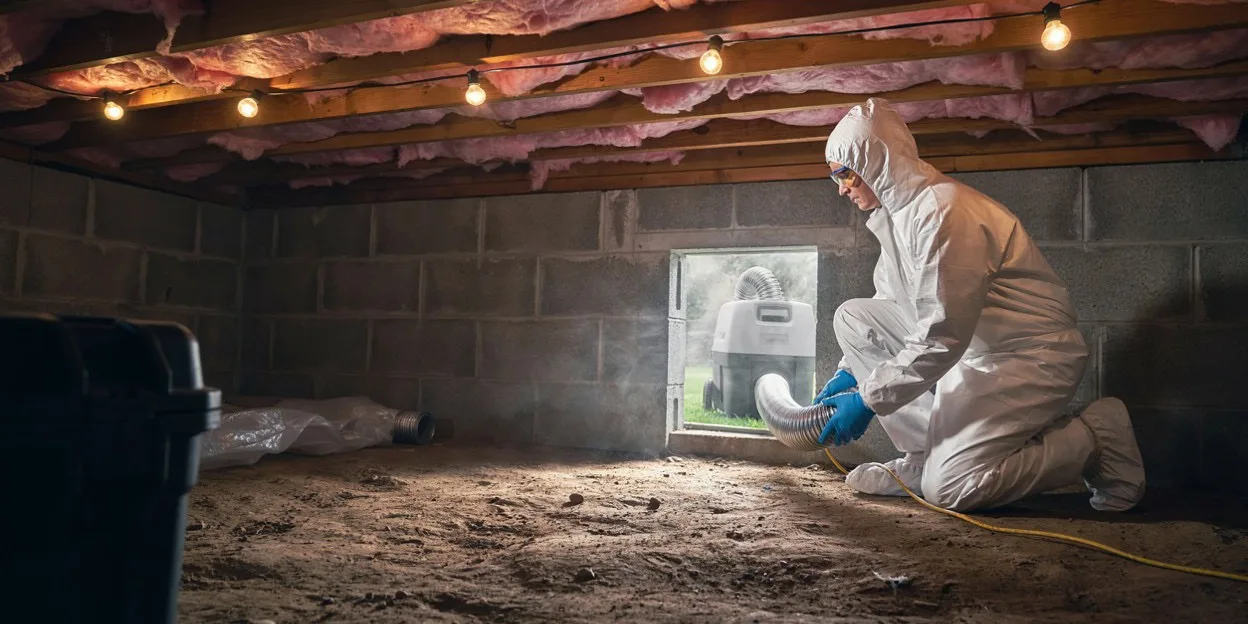
Every room looks fine. The smell is there anyway, strongest in the hallway and the bedroom at the back, and it got worse when the furnace came on in October. You finally pulled the access panel in the closet floor, shone a light down, and saw white and gray fuzz across the joists and a dark wet patch in the dirt under the bathroom. This site connects you by phone with an independent local provider who does crawl space mold remediation in Reno and across Washoe County.
What the crew does first
The crew goes under the house with a light, a moisture meter, and a respirator. They map which joists, the subfloor above them, and the insulation between them read wet, and they find the water. In a Reno crawl space that is usually one of four things: a plumbing leak from the bathroom or kitchen above, a water heater or washer drain that has been running onto the dirt, a foundation vent that lets snowmelt in, or ground moisture in a low spot that never dries.
Containment under a house means sealing the access opening and running negative air so the work does not push spores up through the floor. They also check the ducts. Many older Reno homes have the furnace ductwork running through the crawl space, and a duct with a loose joint pulls crawl space air into the house every time the blower runs.
What to do in the next hour
Do not go down there with a spray bottle. Disturbing the growth without a respirator and without containment is the one thing that makes it worse. Put the access panel back and close the closet door.
Find the water if you can from upstairs. Check under the bathroom and kitchen sinks and around the water heater. Shut off the valve if you find a leak. Note whether the smell is worse when the furnace runs, because that tells the crew the ducts are involved.
What is usually saved and what is removed
Wet insulation between the joists comes out and is bagged under the house. Vapor barrier that is torn or buried in mud comes out. Joists and subfloor are cleaned, usually by HEPA vacuuming and then wiping or abrading the surface, and dried in place unless the wood has rotted. Rotted joists or subfloor sections are cut out and replaced during mold damage repair.
The moisture source is part of the job. A plumbing leak gets fixed. A low spot that collects water gets graded or drained. Bare dirt gets a new vapor barrier. Some crawl spaces need a dehumidifier or sealed vents afterward, and the crew will say so if yours does. If the ducts down there are affected, HVAC mold cleaning handles that part.
Washoe County notes: older Reno is built over dirt
The bungalows in the Old Southwest and Midtown, the 1950s and 60s homes around the university and in Sparks, and the 1970s ranch homes across Northwest Reno, Hidden Valley, and Golden Valley nearly all sit on crawl spaces. Some have two feet of clearance and some have four. Most have galvanized or copper plumbing running through them, foundation vents at ground level, and a vapor barrier that was laid once, decades ago.
Two local patterns feed crawl space mold. Snowmelt and irrigation water run in through the foundation vents on the uphill side of a lot, and in the high desert nobody expects standing water under a house, so nobody checks. And frozen pipes. A supply line in an unheated crawl space splits during a cold snap and sprays until the thaw, and the first sign is the smell.
Newer subdivisions in South Meadows, Damonte Ranch, and Spanish Springs are mostly slab-on-grade, so a crawl space call from those areas is rare. Nevada does not issue a separate mold license. Contractors who replace joists or subfloor are licensed through the state contractors board, and a structural repair usually needs a permit from the city or from Washoe County.
Calling about crawl space mold remediation
Have the address, the age of the house, and what you saw under the floor if you looked. Say whether the smell is worse when the furnace runs and whether you found a leak. Call (775) 459-9573.